
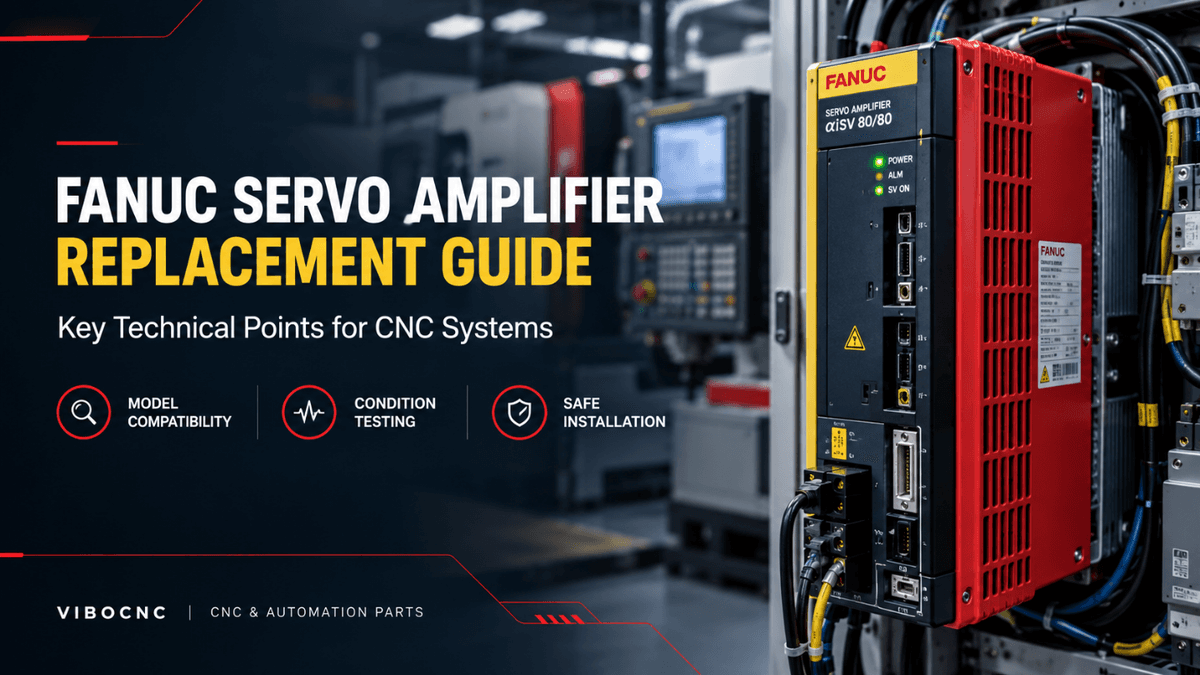
How to Replace FANUC Servo Amplifiers in CNC Systems
Servo amplifiers are important parts in CNC systems. They take command signals and send power to servo motors. In FANUC machines, the A06B series is very common. These fanuc amplifiers work in many machining centers and lathes.
When a servo amplifier fails, the axis can stop or show alarms. Good amplifier replacement helps the machine run smoothly again. This article explains simple steps for finding the right part, testing it, and installing it.
Signs of Amplifier Problems
Look for these common signs:
-
Servo alarms on the CNC screen
-
Overcurrent or voltage problems during high speed moves
-
The servo motor gets too hot
-
Uneven torque or strange axis movement
-
Communication errors between the amplifier and the control
-
Fuses blow often on one axis
These signs do not always mean the amplifier is bad. The servo motor, encoder, or mechanical parts can cause the same alarms. Check the full feedback loop first before you order a new unit.
Find the Correct Model
Every FANUC amplifier has a part number on the nameplate. Write the full number, including any extra letters or numbers at the end. Common examples are A06B-6079-Hxxx and A06B-6114-Hxxx.
Check these points carefully:
-
Does the amplifier match the exact servo motor?
-
Is it a single-axis or multi-axis unit?
-
What is the voltage and current rating?
-
What type of interface does it use (analog, serial, or fiber)?
Using the wrong unit can cause errors or stop the machine from starting. Correct model matching is the first step for good amplifier replacement.
Test the Unit Before Installation
Test the amplifier before you install it. This applies to new, used, or repaired units. Basic installation testing should include:
-
Check for physical damage or leaking parts
-
Turn the unit on and run a self-test
-
Test communication with a CNC or test stand
-
Watch motor current under light load
-
Check if the fan works and if the unit stays cool
Many teams prefer suppliers who test the parts first. This step lowers the risk of installing a bad unit.
How to Replace the Amplifier Safely
Follow these steps:
-
Turn off all power and discharge remaining energy.
-
Mark every cable before you unplug it.
-
Install the new amplifier and reconnect the cables.
-
After installation, run a slow axis reference return. Watch following error and motor current at low speed and high speed.
-
Write the new serial number and date in your maintenance record.
Some older CNC equipment uses models that are no longer made. In these cases, it helps to work with suppliers who keep both new and older stock.
One supplier that focuses on FANUC and other automation parts is Vibocnc. They help with model checks and tested stock for servo amplifiers, servo motors, and related boards.
Extra Tips
-
Keep spare units for important axes if your production needs high uptime.
-
Check the power supply often. Unstable power can damage amplifiers.
-
Look at encoder feedback signals if alarms return after the change.
-
Only update software parameters when the new unit needs it.
-
Train operators to report early signs like noise or vibration.
Good precision motion control needs a clean closed loop system. The amplifier must read feedback signals well and send clear command signals to the servo motor. When this works, the machine delivers high performance in daily CNC machining.
Summary
Successful amplifier replacement starts with the right model and proper testing. After you install the unit, check motor current and following error. These simple steps help CNC equipment run with fewer unexpected stops.
Focus on correct matching, testing before use, and careful installation. This method improves reliability in industrial CNC work.## Next Steps for Ongoing Reliability
After the machine returns to production, keep a short monitoring routine for the first few shifts. Watch alarm history, temperature, and load peaks during normal programs. If anything looks different from the baseline, stop and check the feedback wiring, grounding, and connector seating before changing parameters.
Plan basic preventive maintenance around the amplifier and servo system:
-
Keep electrical cabinets clean and fans/filters working to prevent overheating.
-
Inspect power, encoder, and brake cables for wear, loose shields, or bent pins.
-
Confirm the axis moves smoothly across the full travel and does not hunt at standstill.
-
Recheck torque limits and overtravel settings after any mechanical work.
Document what you did. Record the amplifier model, firmware, parameter set, test results, and the final checks you performed. Clear records make the next service faster, reduce repeated faults, and help the CNC machine stay accurate and stable over time.